Market Concentration & Opportunities

As investors focus on mega-cap U.S. equities, under-the-radar opportunities in dispersed Emerging Markets (EM) provide attractive diversification and potential for strong returns.
The Concentration Dilemma: A Market at Historic Extremes
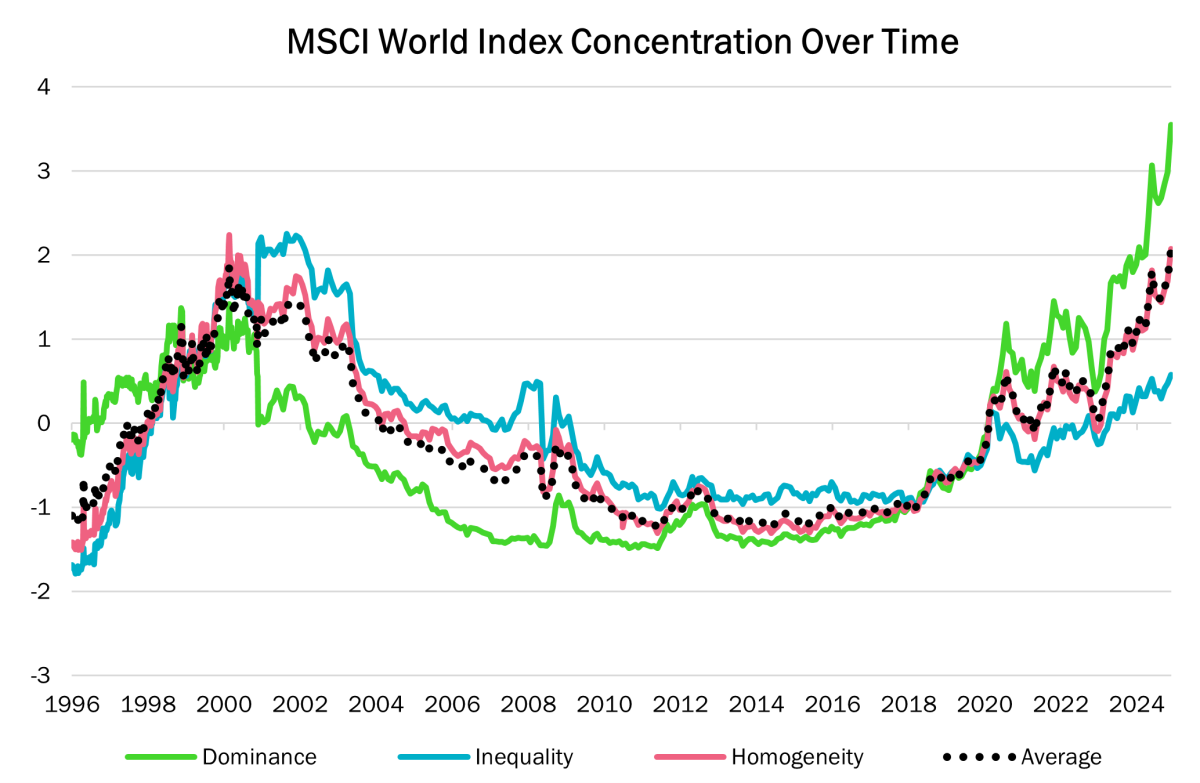
Global equity markets are witnessing an extraordinary level of concentration, with U.S. stocks now making up 72.5% of the MSCI World Index—the highest on record. The dominance of a handful of mega-cap U.S. companies, comprising 19.2% of the S&P 500, has driven valuations to historic highs, echoing the extreme market environment of the dot-com bubble in 2000. While U.S. equities have delivered stellar returns, this concentration presents a risk that investors cannot afford to ignore.
With valuations stretched and economic uncertainty looming, diversification is paramount. History suggests that similar market conditions have led to reversals, rewarding those who broaden their equity exposure. Investors should consider opportunities beyond the crowded U.S. market, particularly in EM, where inefficiencies create fertile ground for active stock selection.
EM: an Attractive and Underappreciated Opportunity
Despite recent headwinds, EM present a compelling investment case.
As we enter 2025 with a consensus favouring higher rates for longer, a US Dollar close to multi-year highs and the prospects of cuts in the post-COVID deficit-driven US stimulus, the asymmetry in both rates and the dollar lies in the downside.
Lower rates are likely in the US as disinflationary forces—ranging from ever-cheaper China exports to AI and reduced deficits--permeate through the economy.
These lower US rates would support EM currencies and flows into EM assets, which have lagged behind in the normalising rates environment.
Valuation Divergence: Justified by Growth Divergence?
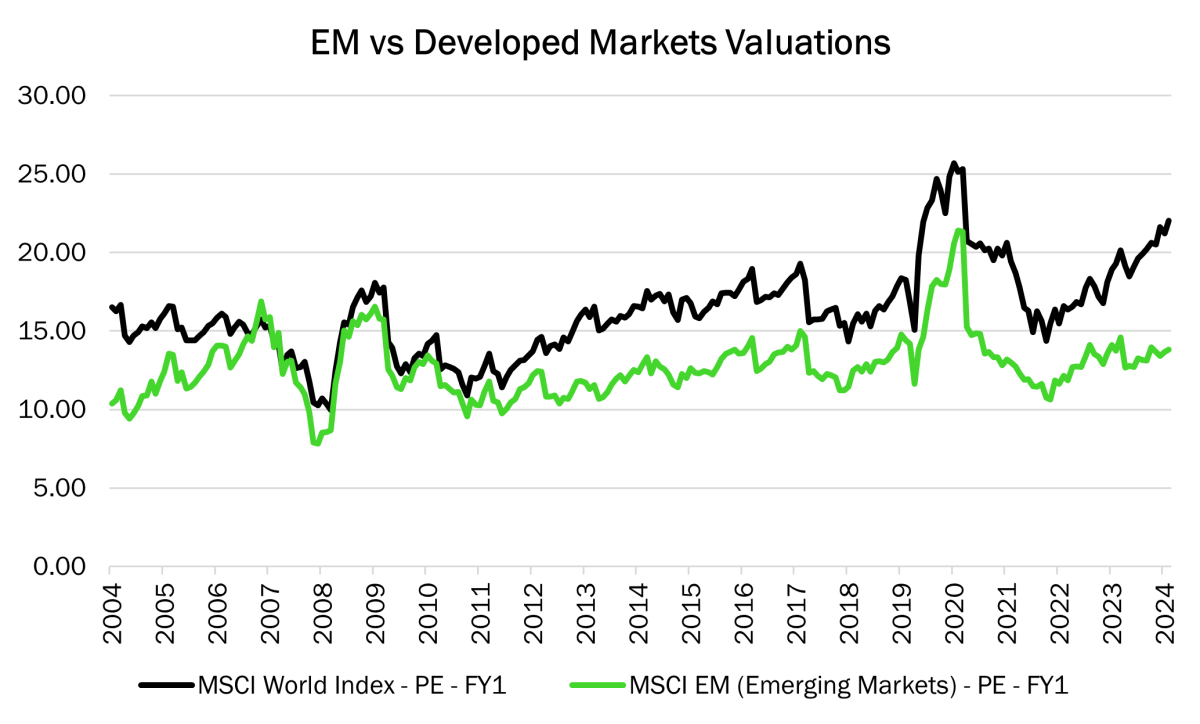
Valuations in developed markets have diverged significantly from those in EM over the past few years. The MSCI EM index now trades at a FY1 PE of 14 while MSCI World at a FY1 PE of 22 (cf. Figure 2). EM equities are now better cash-flow plays than developed as they provide a free cash flow yield of close to 7.7%, while developed markets equities provide only a modest 4.3% yield, which is close to the 20-year low reached in 2007.
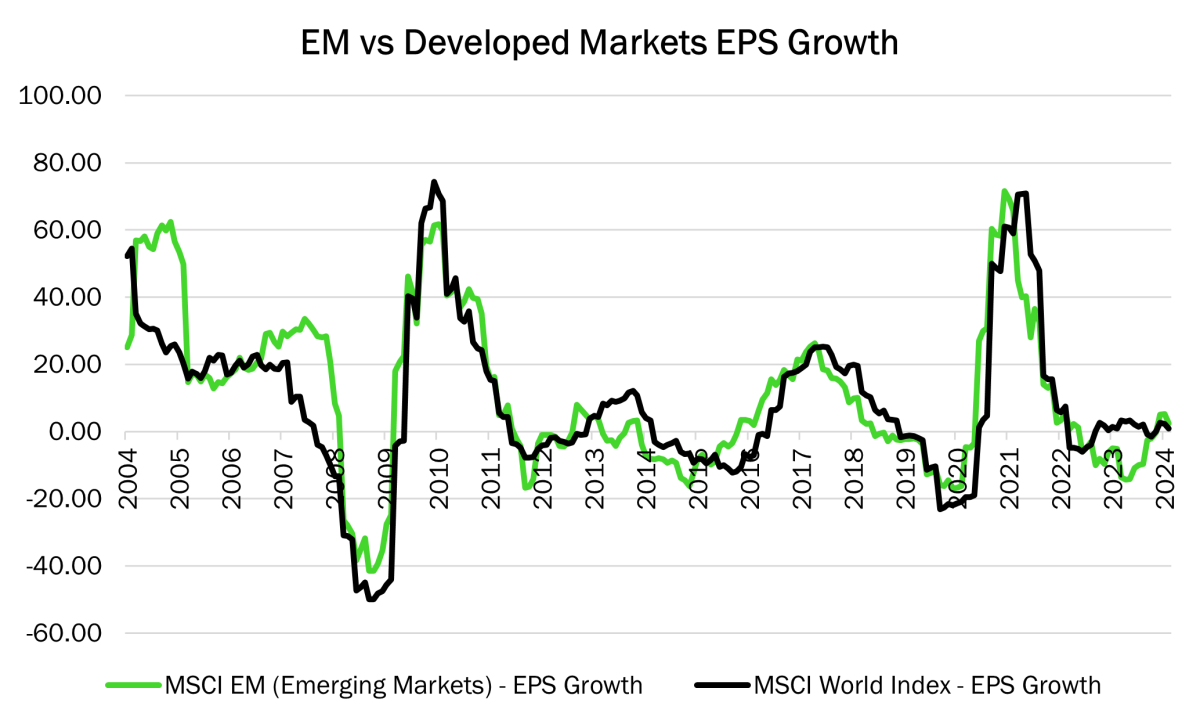
It is hard to justify these valuation spreads by earnings growth divergence, as EM just overtook developed markets on trailing 12-month EPS growth, barely positive for both universes last year (cf. Fig. 3).
The current free cash flow yield of EM equities and the yield attractiveness of EM assets or currencies in general are likely to stimulate demand as real rates in developed markets go back to lower levels in line with their debt burdens and demographics.
Looking long-term, structural growth drivers—such as a rising middle class, technological innovation and favourable demographics—support the long-term potential of EM over developed at these discount valuations.
Current market concentration and macro dynamics are very reminiscent of the beginning of the 2000s, which proved extremely favourable for a then lagging, under-invested EM market.
Selection Opportunities in EM
The current EM stock universe is characterised by a high level of valuation dispersions, offering a wealth of trading opportunities.
EM have historically been where fundamental, price and liquidity-based inefficiencies prevail the most. They are particularly attractive in terms of stock dispersion, as many investors adopt a top-down approach, with country flows often driving divergence in company valuations within sectors.
Since 2009, we have provided access to stock opportunities in EM, employing a strong fundamental stock selection process, systematised to ensure the repeatability of positive outcomes. We have refined our approach to incorporate the most effective processes for capturing a balanced mix of value, low-risk income and growth momentum opportunities across EM. Our well-diversified portfolio spans countries, sectors, styles and market capitalisations, allowing us to effectively manage volatility.
By leveraging a disciplined, systematic process, we analyse thousands of stocks often overlooked by large asset managers, who typically focus on a limited universe of a few hundred names. This allows us to identify high-quality mid-cap companies with significant upside potential that remain off the broad market’s radar.
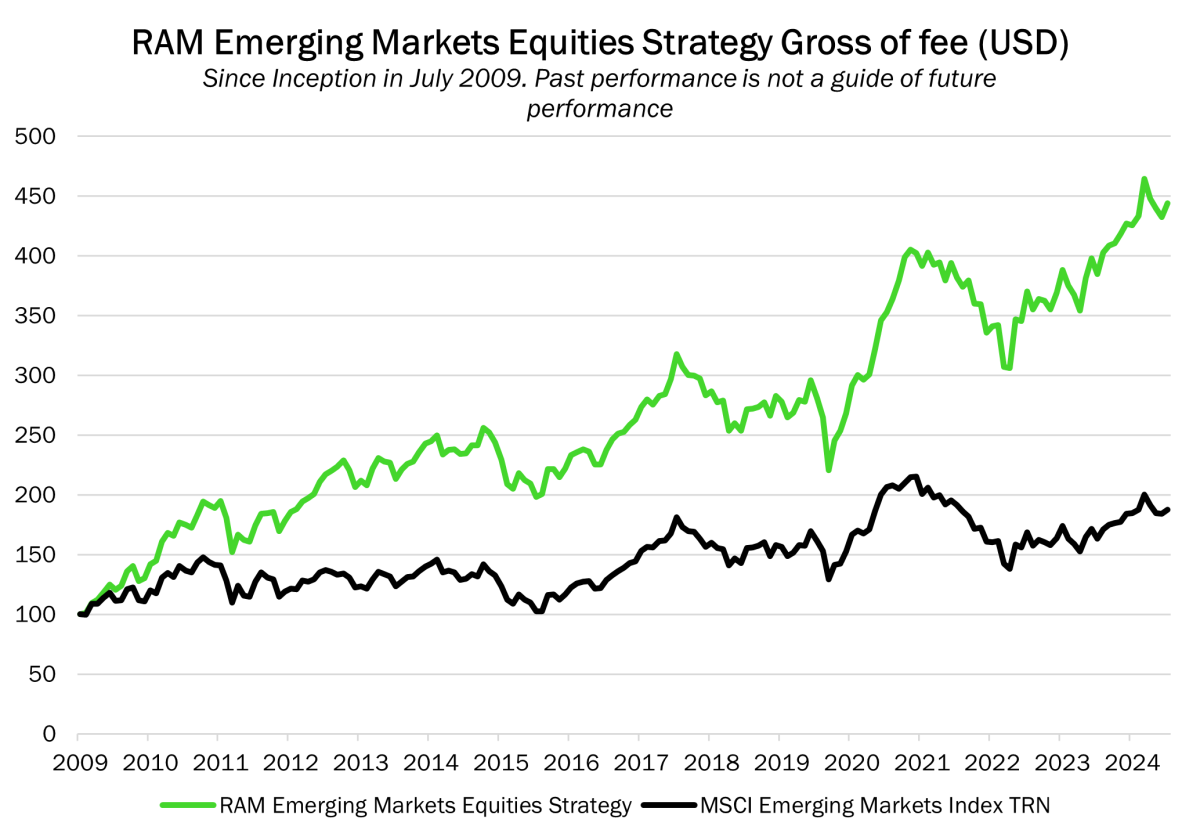
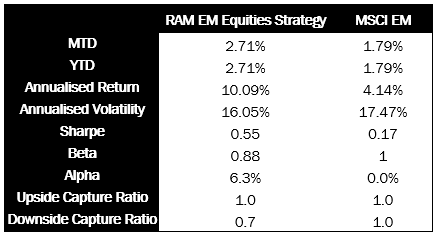
Since 2009, the strategy has generated a 6% annualised excess return relative to MSCI, with 1.5 points less volatility than the market.
Artificial Intelligence and Timing
At RAM AI, to generate strong returns, we focus not only on identifying high-quality fundamental stocks but also on constantly refining the timing precision, knowing when to enter and exit these positions.
As the complexity of timing grows with the multiplication of datasets and inputs available to market participants, Artificial Intelligence (AI) has become an important tool to manage it efficiently.
Our Machine Learning models help us dynamically adjust position sizing by analysing hundreds of factors—including price, liquidity, risk, technical indicators and sentiment—alongside fundamental data. This ensures optimal timing management, to maximise alpha while minimising risk, effectively capturing and trading market opportunities.
Recent developments in AI, with the strong improvement of Large Language Models (LLMs) help us enrich these inputs with news (see Fine-Tuning Large Language Models for Stock Return Prediction Using Newsflow), earnings calls transcripts and improve the estimation of return potential for each stock across our strategies.
Regarding recent AI developments, DeepSeek highlights the fantastic dynamic in the open-source models community, and the trend towards lightweight LLMs. At RAM AI, we have been leveraging these advancements for years to make better sense of our data and continually enhance our investment process.
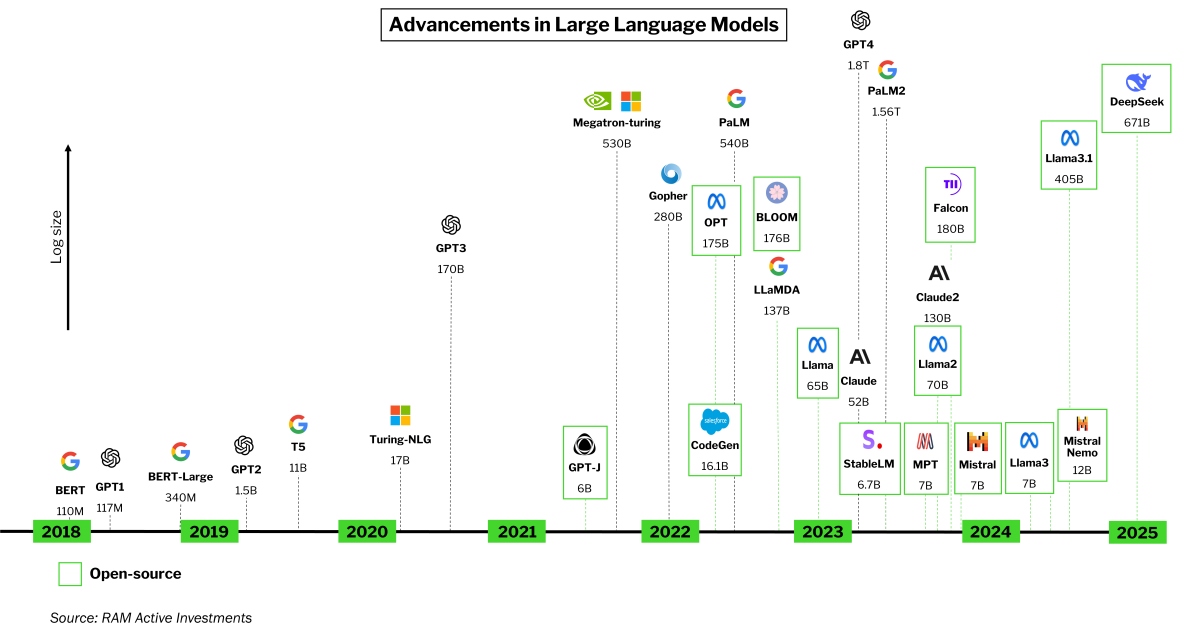
Image Gallery
Legal Disclaimer
Marketing Material. All forms of investment involve risk. The value of investments and the income derived from them is not guaranteed and it can fall as well as rise and you may not get back the original amount invested.
Plus d'actualités et d'informations
.png)
.png)
.png)
.png)